Why does dual standby matter on dual SIM phones?
Why does dual standby matter on dual SIM phones?
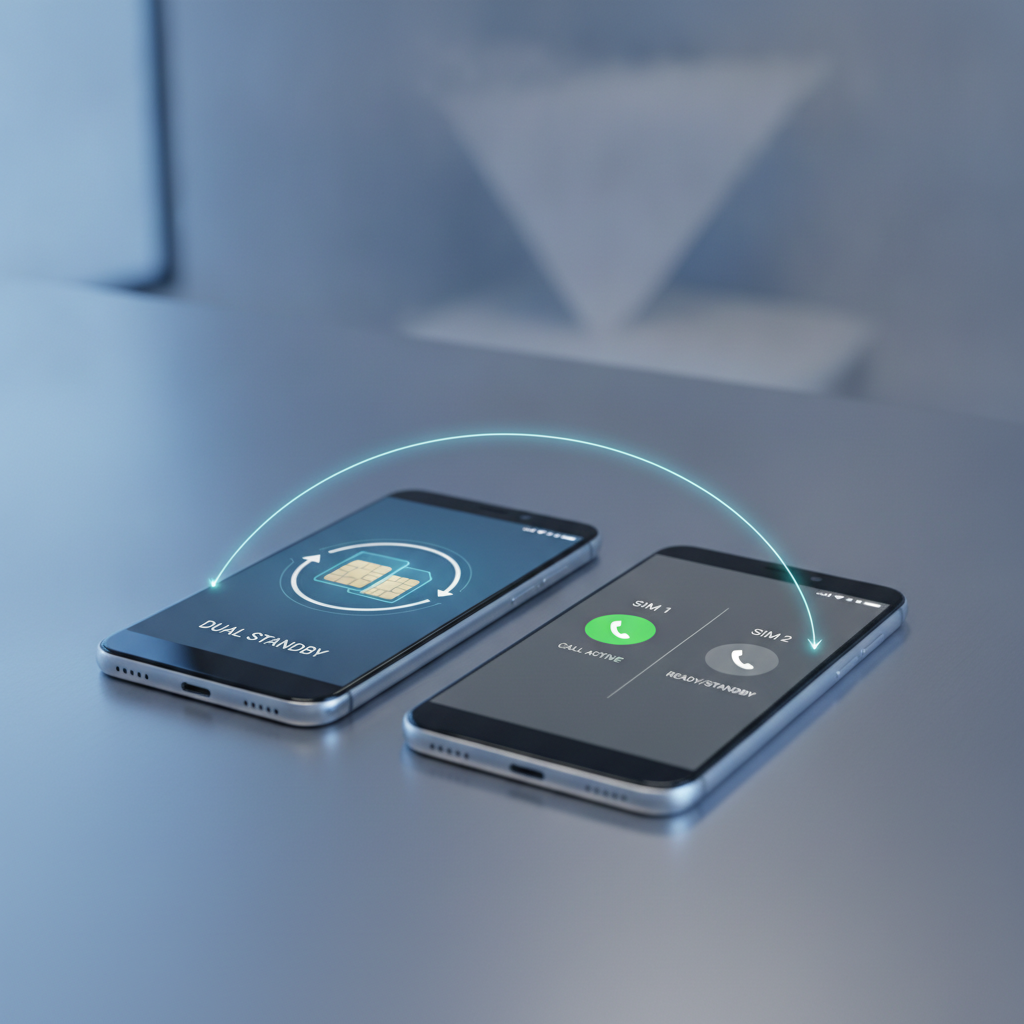
Short answer: dual standby matters because it decides what your second line can do while the first one is busy. Almost every dual-SIM phone sold in 2026 — the Samsung Galaxy S26 Ultra, the iPhone 17 series, the Google Pixel 10a — uses Dual SIM Dual Standby (DSDS): two SIMs sharing one modem. Both numbers stay reachable while the phone is idle, but the moment you take a call on one line, the other goes dark and callers hit voicemail or a busy tone. The same single-modem design is why one line drops from 5G to 4G. If you understand dual standby, every common dual-SIM complaint suddenly makes sense.
Chester Takau · DualSIMCardPhone
Chester Takau is an independent reviewer of dual-SIM and eSIM technology, testing setups from the Pacific where connectivity choices really matter.
Updated September 2026
What dual standby actually means
Dual SIM Dual Standby means both of your SIMs are registered on their networks at the same time while the phone sits idle. Either number can receive a call or text. What they can't do is use the radio at the same moment — a DSDS phone has one modem, and the two lines time-share it. A July 2026 industry guide from 5Gstore puts it bluntly: the modem is the bottleneck, and the phone juggles which SIM gets it.
That juggling act is a hardware fact, not a setting. A phone ships with one modem/radio chain or two, and no software update turns the first kind into the second. The two-radio design — Dual SIM Dual Active (DSDA) — can hold two live calls at once, but it's rare in current flagships because it costs more, draws more power, and most buyers never ask for it. So the industry settled on DSDS as the default compromise.
There's also an older, weaker mode worth naming: Dual SIM Single Standby (DSSS), where only one SIM is registered at a time and the other is unreachable until you manually switch. It survives in some budget and legacy devices, and it's the one mode where "dual SIM" barely deserves the name.
The physical side matters too. On many Android phones the second line shares its tray with storage — a hybrid SIM slot takes either a second SIM or a microSD card, never both — so "dual standby" can also mean choosing between a second number and extra storage before you even power on.
If you want the two-minute version, this explainer walks through how DSDS mode keeps two SIMs registered on a single modem:
Why does my second SIM go straight to voicemail while I'm on a call on the first one?
Because one modem can't carry two voice connections. When line one is on a call, the radio is committed to that network. Line two is still "on standby" in name, but nothing reaches it until the first call ends. Callers get your voicemail, a busy tone, or a "not reachable" message — even with full signal bars on both SIMs.
This is the single most-reported dual-SIM complaint, and it's still live in 2026. Active Apple Community threads this year describe the second line rejecting calls or sending them straight to voicemail mid-call, and Samsung's owner forums carry the same reports. In most cases it's expected DSDS behavior rather than a defect — though not always. Google Pixel Help has open 2026 threads titled "Dual Sim Dual Standby not working," where the standby line never registers properly at all, which is a genuine implementation bug rather than the designed limitation.
Practical mitigations: turn on carrier call forwarding so missed calls on one line roll to the other, make sure voicemail is set up on both lines, and tell important contacts which number to try first. None of these fix the underlying radio-sharing — they route around it.
Why does my phone lose 5G on one or both lines when dual SIM is turned on?
On most current DSDS phones, only the active SIM holds a 5G connection. The standby SIM falls back to 4G/LTE, because the shared modem can't maintain two 5G links. Which line counts as "active" isn't random — it follows how your phone chooses which SIM handles data and calls, based on your default-SIM settings and network conditions.
The behavior also changes by region, which confuses buyers who read reviews from other markets. On phones sold in China, the primary SIM typically keeps 5G while the second drops to 4G. In the US, some devices lose 5G on both lines when a SIM+eSIM pair is active. And US-purchased iPhones since the iPhone 14 have no physical SIM tray at all — dual SIM there means two eSIM profiles sharing one DSDS modem, so the whole question plays out in software.
Why you won't find this on the spec sheet: manufacturers advertise "5G dual SIM" without mentioning that the second line drops to 4G, or that both lines can lose 5G depending on region. The evidence lives in owner forums — Apple Community, Samsung's EU forum, XDA threads — not in marketing pages. This article pulls that scattered 2026 evidence into one place, which is exactly what's missing from most "what is DSDS" explainers.
DSDS vs DSDA vs DSSS at a glance
| DSDS (Dual Standby) | DSDA (Dual Active) | DSSS (Single Standby) | |
|---|---|---|---|
| Modems / radios | One, time-shared | Two, independent | One |
| Reachable when idle | Both lines | Both lines | Only the selected line |
| During a call on line 1 | Line 2 unreachable — voicemail or busy | Line 2 still rings; you can answer or merge | Line 2 unreachable until you switch manually |
| 5G behavior | Active line only; standby drops to 4G | Both lines can hold fast data | One line at a time |
| Where it appears in 2026 | Nearly all dual-SIM flagships — Galaxy S26 Ultra, iPhone 17, Pixel 10a | A small number of niche and older models | Legacy and ultra-budget phones |
| Battery cost | Modest; worse if one SIM has weak signal | Highest (two radios live) | Lowest |
Does using dual SIM kill your battery faster, or is that a myth?
Neither, and the reports genuinely conflict. Some owners see heavy overnight standby drain that vanishes the moment they disable one SIM; others measure no difference at all. The pattern that fits both camps is signal strength. Two SIMs on strong networks cost little — the modem's idle paging is cheap. One SIM camped on a weak, distant cell forces the radio to shout, and that's when dual standby stings. If your battery dropped after adding a second SIM, check that SIM's signal before blaming DSDS itself.
Where dual standby earns its keep: travel and two numbers
The dominant 2026 use case is travel. Keep your home SIM active for calls and bank OTP codes, add a travel eSIM for local-rate data, and point mobile data at the eSIM. Providers put this at roughly $4–$8 per week versus $10–$15 per day in roaming fees, and your home number keeps working the whole time — standby is precisely what makes the trick possible. If that's the setup you're after, our walkthrough on how to set up a dual SIM phone for travel covers which defaults to pick before you board.
The second big use case is separating work and personal numbers on one device instead of carrying two phones. Dual standby handles the idle case well — both numbers receive calls and texts all day. The honest caveat: your work line will miss calls while you're talking on your personal line. Set up voicemail and forwarding on both numbers and plan for it, rather than discovering it during a client call.
When dual standby isn't enough
If your livelihood depends on two lines being live at the same instant — a call center agent, a field technician juggling dispatch and a customer — DSDS can't guarantee that, no matter how good the phone is. The 5Gstore guide cited above makes the industry argument directly: business-critical users should stop relying on phone-level dual SIM and move to dedicated dual-modem cellular routers from Peplink, Cradlepoint, or Teltonika, where each line genuinely gets its own radio. For most people that's overkill. For a two-line professional, it's the difference between a spec that sounds right and hardware that is right.
FAQ
Can I get VoLTE (4G calling) working on both SIMs at once?
Usually yes for standby — most current phones let both lines register VoLTE while idle, and you should enable it on both for call quality. What VoLTE can't do is make the calls simultaneous: during an active call the modem belongs to that line, and the second number still can't take a call.
Will WiFi calling let my second number ring even while I'm on a call on the first?
Sometimes. If the second line has WiFi Calling provisioned and your carrier allows it, an incoming call can arrive over WiFi while the modem is busy. Support varies widely by carrier and device, and 2026 forum threads still report failures — test it with your own setup before depending on it.
If I put in a travel eSIM, does my home number stop working entirely or just stop for data?
On a DSDS phone, neither line dies. Your home number stays registered for calls and SMS — including one-time passcodes — while mobile data runs on the travel eSIM. What stops is home-SIM data, which is exactly what kills the roaming bill. iPhone users with eSIM-only models can find device specifics in Yesim's 2026 dual-SIM iPhone guide.
Why do texts and MMS on the "background" SIM interrupt my data on the "active" SIM?
One modem serves both networks. When a message arrives on the standby line, the radio briefly retunes to that network to receive it, and the active line's data can stall or stutter for a moment. It's the same time-sharing behavior as the missed-call problem, just on a smaller scale.
Is DSDS just a software toggle, or is it a hardware limitation of the modem?
Hardware. Standby behavior comes from having a single modem/radio chain, so no update can turn a DSDS phone into a dual-active one. Software updates can fix registration bugs — the Pixel "DSDS not working" threads are that kind of problem — but they can't add a second radio.
Sources
- 5Gstore — DSDS, DSDA and DSSS explained (July 30, 2026)
- Tech Advisor — Best dual-SIM phones 2026
- Apple Community — missed calls on the second line while on a call
- Apple Community — 5G and dual SIM behavior by region
- XDA Forums — 5G and dual-SIM limitations
- Google Pixel Help — "Dual Sim Dual Standby not working"
- Yesim — Dual SIM iPhone guide 2026
- Nexaesim — keeping your number while using a travel eSIM (2026 pricing)
Updated September 2026.
Transparency note: This article was researched and written by Chester Takau with AI assistance for research gathering and drafting. All recommendations reflect the author's own editorial judgment.


