Why Does Hybrid SIM Slot Matter? The 2026 Trade-Off Explained
Why Does Hybrid SIM Slot Matter? The 2026 Trade-Off Explained
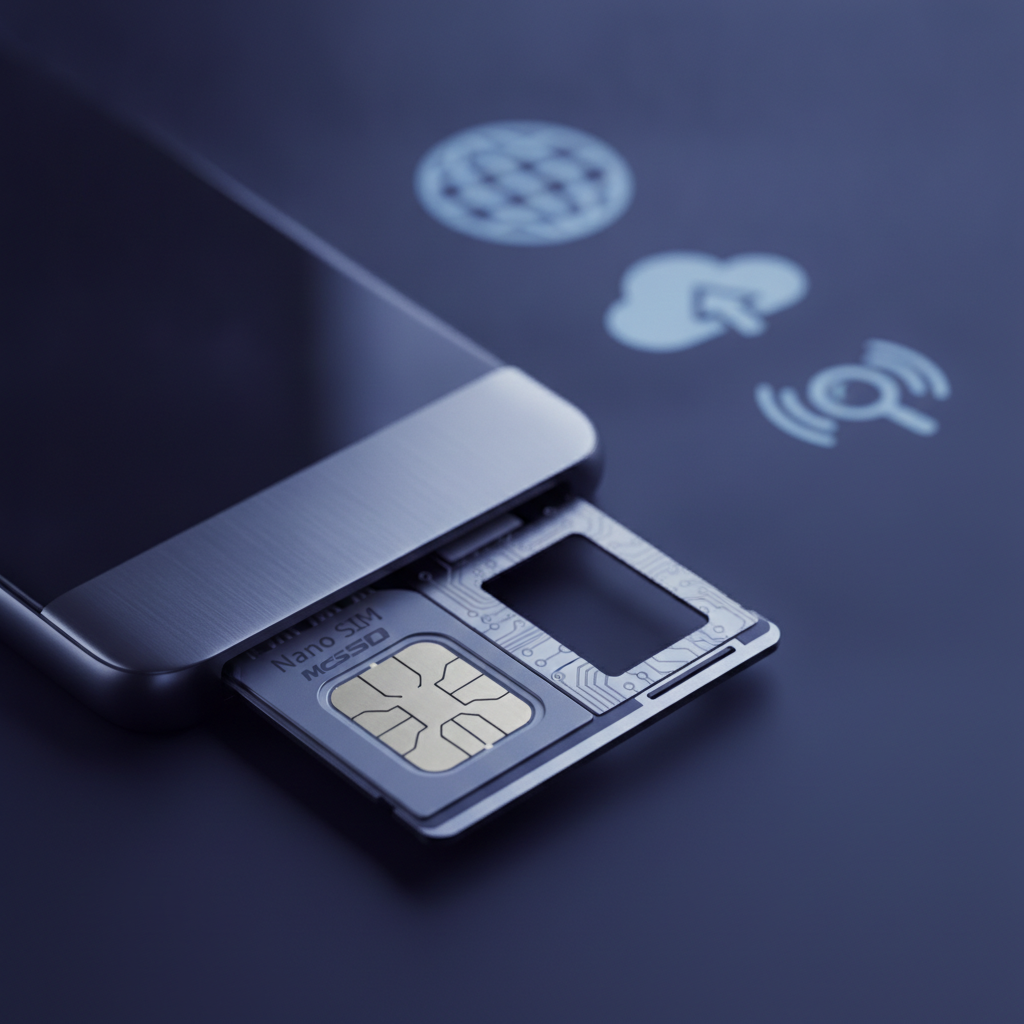
Short answer: a hybrid SIM slot matters because it puts a hard ceiling on what your phone can do at once. The second position in the tray accepts either a second nano-SIM or a microSD card — never both. That single design choice decides whether you can run two phone lines, expand storage on the cheap, or pick one and give up the other. And it matters more in 2026 than it ever has: with flagships like Apple's iPhone Duo going eSIM-only worldwide, the hybrid tray is increasingly the last middle ground between full flexibility and none at all.
By Chester Takau. Chester Takau is an independent reviewer of dual-SIM and eSIM technology, testing setups from the Pacific where connectivity choices really matter.
What a hybrid slot actually is
Take the Samsung Galaxy A17 5G, a $200 phone reviewed widely this year. Its tray has two positions, but they are not equal: Slot 1 takes a nano-SIM only, while Slot 2 takes a nano-SIM or a microSD card (up to 2TB). Load storage into Slot 2 and the second line is gone. That shared second position is the "hybrid" part — one physical space, two mutually exclusive jobs.
Manufacturers use the design because it saves tray space and tooling cost while still letting them print "dual SIM" on the box. If you want the full mechanical breakdown of the tray layout and contact arrangement, our explainer on what a hybrid SIM slot is and how the shared tray works covers it position by position.
The trade-off at the heart of it
The dominant user sentiment around hybrid trays is frustration, and it is easy to see why. As GSMArena's Counterclockwise column puts it, the format forces "a decision between a second SIM card or an SD card" — a choice owners of dedicated three-slot phones never have to make. Forum threads across Samsung's community and GSMArena's comment sections repeat a specific version of the complaint: microSD is valued as a no-account-needed backup for photos and contacts if a phone dies, so surrendering it for a second line feels like a real loss, not a paperwork inconvenience.
There is a defense of the format, and it mostly comes from travelers. A hybrid tray lets you land somewhere new, drop a local SIM into Slot 2, and keep your home line live in Slot 1 — without the phone needing a third physical position. For a two-week trip, giving up the memory card is a reasonable price for cheap local data.
| Tray type | What fits at once | Two lines + microSD together? | Where you see it in 2026 |
|---|---|---|---|
| Hybrid tray | Two nano-SIMs, or one nano-SIM + microSD (up to 2TB on the Galaxy A17 5G) | No | Budget/mid-range Android (Galaxy A17 5G, A56 5G), Sony Xperia 1 VIII |
| Dedicated dual-SIM + microSD | Two nano-SIMs plus microSD, all three at once | Yes | Increasingly rare, mostly lower-cost models |
| eSIM-only | eSIM profiles only — no physical SIM, no microSD | No physical cards at all | iPhone Duo, US-model iPhones, eSIM-first Pixels |
The trade-off has become enough of a flashpoint that it drives long-form video criticism. "The Big Problem with Hybrid SIM Slots" argues the format forces an unnecessary storage-versus-second-line decision on buyers:
Why this matters more in 2026 than it used to
For years the hybrid slot was a mid-range quirk. This year it became a dividing line in the industry's direction:
- September 10, 2026 — Apple unveiled the iPhone Duo, its first foldable, confirmed eSIM-only worldwide with no physical-SIM fallback anywhere on the launch list. Preorders open October 16, and it ships October 23 in more than 70 countries, all eSIM-only, per Macworld's launch guide.
- May 13, 2026 — Sony launched the Xperia 1 VIII, the only 2026 flagship keeping a hybrid tray (nano-SIM + microSD, or two nano-SIMs), and was explicitly positioned as the "anti-flagship" for that reason.
- Meanwhile, at $200 — the Galaxy A17 5G kept its hybrid tray, which PhoneArena's review called "a welcome option" at the price — a sign of how far the feature has slid downmarket.
Tracking of the broader market tells the same story: Apple, Samsung and Google are all pushing eSIM-only or eSIM-first variants, and UK retailer commentary on the Galaxy A56 notes hybrid slots are "rapidly disappearing from the Android market." So the question "does this phone have a hybrid slot?" has quietly become "does this phone have any physical flexibility left at all?"
The questions buyers actually ask
Does a hybrid slot let me use two SIMs and a microSD card at the same time?
No. This is the single most-asked question across Samsung forums and GSMArena comments, and the answer never changes: the shared position holds one card. Two nano-SIMs means zero microSD; microSD means one nano-SIM. When you do run two nano-SIMs, both lines idle together and either can receive calls — that behavior is dual standby, and our guide to how dual standby works on dual SIM phones explains what DSDS does when a call comes in on the line you're not using.
If I insert a microSD card, do I lose dual-SIM entirely?
Yes — on the physical side. Slot 2 is occupied, so a second nano-SIM has nowhere to go. Slot 1 keeps working normally; nothing happens to your primary line.
Can eSIM plus one physical SIM get around the limitation?
On phones that support eSIM, yes, and this is the cleanest escape hatch. Run your second line as an eSIM profile, keep one nano-SIM in Slot 1, and Slot 2 stays free for a memory card. The Galaxy A56 5G is a good 2026 example: it supports two nano-SIMs, nano-SIM + eSIM, or two eSIMs. The catch is that eSIM support itself is uneven on budget hardware — the $200 phones most likely to keep hybrid trays are often the ones without eSIM.
How do I tell from a spec sheet whether "dual SIM" means a hybrid tray?
"Dual SIM" on a listing tells you nothing about the tray. Before buying, check these:
- The memory card line. "microSDXC (uses shared SIM slot)" means hybrid. "microSDXC (dedicated slot)" means three separate positions. Spec databases like GSMArena state this explicitly.
- The manufacturer's own wording. "Hybrid Dual SIM" appears verbatim on many product pages — search the page for "hybrid" before assuming.
- Tray photos. Two nano-SIM outlines plus a separate microSD outline means dedicated; one outline shaped to accept either card means hybrid.
- eSIM support. Its presence changes the whole calculation, because the hybrid position stops being your only route to a second line.
A recurring "bait" complaint in reviews and forums comes from buyers who assumed "dual SIM" meant two full physical slots and discovered the shared tray after purchase. Five minutes on the spec sheet prevents that.
Can a firmware update break my hybrid setup?
Users on Samsung's community forums reported exactly this on the BRF8 firmware thread: a second SIM stopped being recognized after an update while a microSD card was also inserted. These are user reports rather than confirmed policy, but the practical advice holds — after any major update on a hybrid-tray phone, test both lines and the memory card before you travel, and re-seat the tray if Slot 2 misbehaves.
So is a hybrid slot worth buying for in 2026?
It depends on which side of the trade-off you live on:
- You travel and run two lines. A hybrid tray (or eSIM) is close to essential. Swap a local SIM into Slot 2, keep the home line in Slot 1, done. If your next phone is eSIM-only, whether you miss the tray comes down to how heavily you rely on both lines being reachable at once — our companion piece on why dual standby matters on dual SIM phones walks through the daily-use difference.
- You store everything locally. Big photo libraries and offline media argue for keeping Slot 2 free for microSD — or buying enough internal storage that the question disappears.
- You are buying a flagship in late 2026. Plan around eSIM. With the iPhone Duo shipping eSIM-only in 70-plus countries and the Xperia 1 VIII standing alone among flagships, the physical tray is no longer something you can take for granted at the high end. Check that your carrier handles eSIM transfers smoothly before you commit.
The old two-physical-SIM habit still works — but increasingly it works on $200–$500 Android phones, not on the devices getting keynote stages. Knowing what a hybrid tray does, and how to spot one before you pay, is now basic buyer literacy rather than enthusiast trivia.
FAQ
Can I use two SIM cards and a microSD card at the same time in a hybrid slot?
No. The shared second position holds one card. You get two nano-SIMs with no expandable storage, or one nano-SIM plus microSD.
Which slot is the hybrid one on my phone?
Almost always Slot 2 — Slot 1 is typically nano-SIM only. The tray itself usually has the shapes printed on it, and the manual or spec page confirms which position is shared.
Will my two-physical-SIM setup still work on an eSIM-only phone like the iPhone Duo?
Not with physical cards — there is no tray. Both lines would need to move to eSIM profiles, which means confirming both carriers support eSIM transfer before you switch.
Is a hybrid slot the same as dual standby?
No. Hybrid describes the tray hardware (which cards fit). Dual standby (DSDS) describes how two active lines behave (both idle, either can receive calls). A hybrid-tray phone usually runs dual standby when two SIMs are loaded.
Are hybrid slots disappearing?
From flagships, largely yes — the Sony Xperia 1 VIII is the only 2026 flagship retaining one. In the budget and mid-range Android tier, they remain common.
Sources
- Apple unveils iPhone Duo — Apple Newsroom, September 10, 2026
- iPhone Duo guide: release date, price, specs and features — Macworld, 2026
- Sony Xperia 1 VIII: the "anti-flagship" flagship — TechSpot, May 2026
- Samsung Galaxy A17 5G review — PhoneArena, 2026
- Counterclockwise: the relationship between dual SIM slots and microSD cards — GSMArena
- Best dual SIM phones — Talkmobile, 2026
Updated September 2026.
Transparency note: This article was researched and written by Chester Takau with AI assistance for research gathering and drafting. All recommendations reflect the author's own editorial judgment.


