What Is eSIM Work? How the Embedded SIM Actually Works
What Is eSIM Work? How the Embedded SIM Actually Works
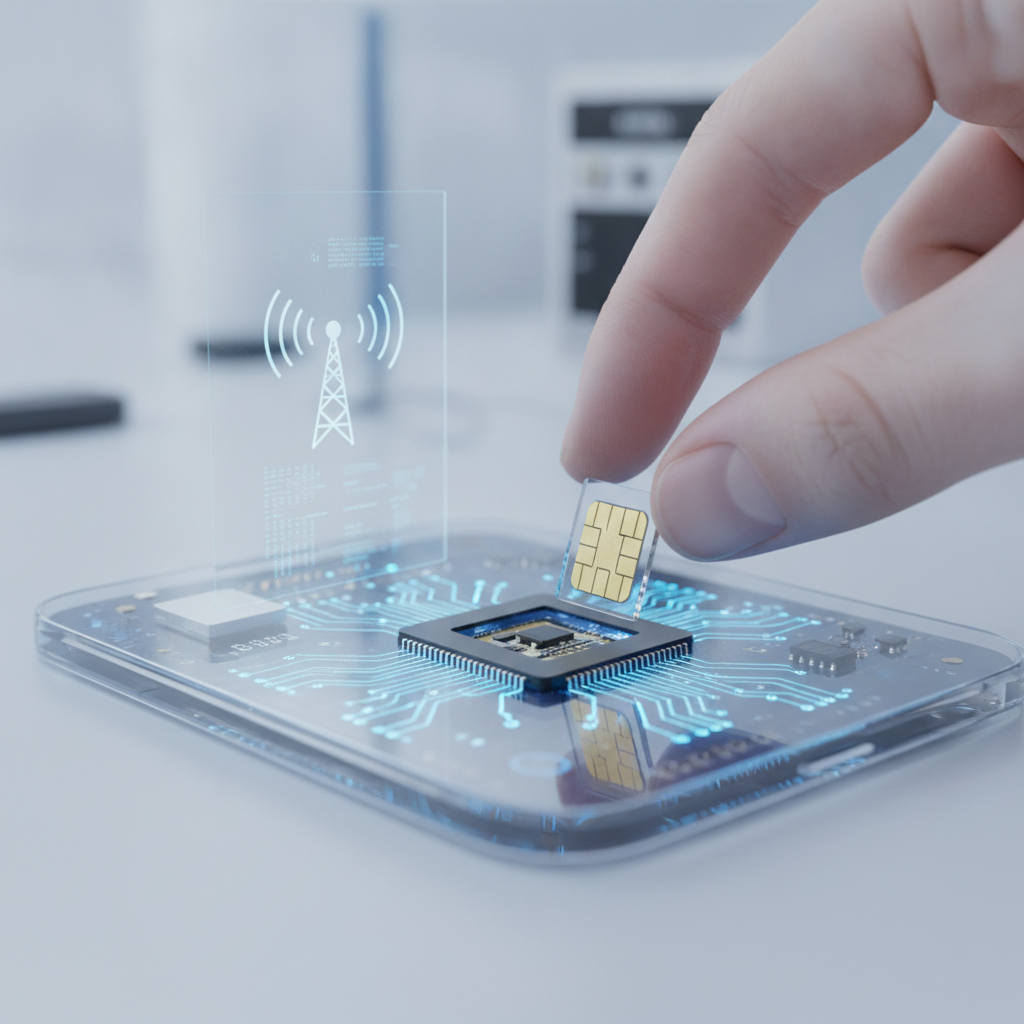
The short answer: an eSIM ("embedded SIM") is a small chip permanently soldered inside your phone, watch, or tablet that does exactly the job of a plastic SIM card — it stores the subscriber profile that proves your identity to a mobile network. The working difference is delivery. Instead of sliding in a card, you download that profile over the internet, usually by scanning a QR code from your carrier. Once installed, the network treats it like any SIM: same authentication, same radio, same signal.
One phone can hold many profiles and run two lines at once, and switching carriers takes minutes rather than a trip to a store.
This is no longer a niche feature. Global eSIM connections are projected to grow from 1.2 billion in 2025 to 1.5 billion in 2026 — a 30% jump in a single year, according to a Juniper Research forecast published in January 2026. And the GSMA's consumer eSIM standard is now live with more than 270 mobile operators across 83 countries, up from roughly 180 operators in 2023, per GSMA Intelligence.
About the author
Chester Takau is an independent reviewer of dual-SIM and eSIM technology, testing setups from the Pacific where connectivity choices really matter.
What actually is an eSIM — hardware, software, or both?
Both, and the distinction matters. The physical part is an eUICC — an embedded universal integrated circuit card — a tamper-resistant chip a few millimetres across that the manufacturer solders onto the device's motherboard at the factory. You can't remove it, lose it, or snap it in half.
The software part is the carrier profile: the bundle of data a SIM normally carries, including your IMSI (subscriber identity), the authentication keys the network uses to verify you, and your plan settings. An eSIM chip ships without any subscription attached and can be written, erased, and rewritten many times over the phone's life. "How eSIM works" is really the story of how those profiles get delivered, stored, and swapped.
If you want the bigger industry picture — why Apple, Samsung, and Google are all converging on tray-less designs — we've covered how embedded SIMs work and why they're replacing physical SIMs as a separate pillar guide.
How does an eSIM work when you activate a plan?
Activation is a download, not an insertion. The typical sequence:
- Your carrier prepares a profile on a secure server — an SM-DP+, in GSMA terminology.
- You receive a QR code, an activation code, or a prompt inside the carrier's app.
- Scanning the code tells your phone's local profile assistant (LPA) to fetch the profile from that server and install it on the eUICC chip.
- The phone authenticates to the network using the keys in the profile — the same cryptographic handshake a plastic SIM performs.
The whole exchange usually takes two to five minutes. The rules governing it are the GSMA's SGP.22 consumer specification, which is why a profile from a carrier in one country installs cleanly on a phone bought in another.
Prefer to watch it? Saily's three-minute explainer covers the same ground:
eSIM vs physical SIM: the practical differences
Most "what is eSIM" pages stop at activation. The table below compares the two across the dimensions that actually bite in daily use — including the repair row, which forum threads suggest is the single biggest source of frustration and which most explainers skip. We give it a full section further down.
| Physical SIM | eSIM | |
|---|---|---|
| What it is | Removable plastic card (nano-SIM) holding a chip | eUICC chip soldered to the motherboard |
| Activation | Insert the card, sometimes enter a PIN | Scan a QR code or use the carrier app; profile downloads in minutes |
| Switching carriers | Buy or wait for a new card | Download a new profile — no store visit, no mail |
| Lines stored | One per card | Often 8–20+ profiles stored; up to two active at once |
| Travel | Find a local SIM on arrival and swap cards | Add a travel data plan before you fly |
| If the phone breaks | Pop the card into any spare phone in seconds | Carrier must re-issue the profile (fresh QR code), sometimes with ID verification |
| Theft resistance | A thief can remove the card, killing tracking | Nothing to remove; tracking keeps working while the phone has power |
| Signal and call quality | Set by the phone's modem, antenna, and bands | Identical radio hardware — no inherent difference |
Can I use eSIM and a physical SIM at the same time?
Yes — this is the setup this site is built around. Most eSIM-capable phones support dual SIM dual standby (DSDS): one physical nano-SIM plus one eSIM, both registered on their networks at once. You take calls and texts on either line and choose which one handles mobile data. Newer iPhones and Pixels go further with dual eSIM — two downloaded profiles active simultaneously, no card at all.
The direction of travel is clear. Apple's iPhone 17 Air arrived as the company's first globally eSIM-only phone, shipping without a SIM tray in any market, and T-Mobile's T-Satellite service uses eSIM provisioning to extend satellite connectivity even to AT&T and Verizon customers, according to Telecoms.com.
Does my phone support eSIM — and how do I check?
iPhone: every model from the iPhone XS/XR onward supports eSIM. Look under Settings → Cellular (or Mobile Data) — if you see "Add eSIM," you're set. Apple's support page keeps the current model list.
Android: support starts around the Samsung Galaxy S20 and Google Pixel 3, with regional exceptions. Check Settings → Network & Internet → SIMs for an "Add eSIM" option, or dial *#06# — if the list that appears includes an EID (eSIM identifier), the chip is physically present.
The carrier matters as much as the phone. Coverage now spans 83 countries, but gaps persist: some European carriers still charge extra to issue an eSIM or exclude it from prepaid plans, per PhoneArena — an awkward surprise for budget travelers.
What happens to my eSIM if I switch phones or my phone breaks?
This is the angle most coverage ignores, and where forum complaints cluster.
iPhone to iPhone: Apple's eSIM Quick Transfer moves your line during setup, where the carrier supports it. Samsung offers a similar transfer between Galaxy devices.
iPhone to Android (or back): there's usually no direct path. The carrier must re-issue the profile — typically a fresh QR code — which can mean an app, a support call, or a store visit. It recurs constantly in support threads because people expect it to work like moving a card.
Broken, bricked, or in repair: with a cracked screen and a dead phone, there's no card to pop into a backup handset. You contact the carrier, verify your identity, and get a new profile issued. Some carriers allow self-service re-issue in their apps; others want you in a store with ID. Practical advice: before traveling, know your carrier's re-issue process and keep your account credentials somewhere that isn't the phone itself.
Regulators have noticed the friction — new EU rules now require easier eSIM transfers between phones, per the same Telecoms.com analysis.
Is eSIM more secure than a physical SIM?
Against physical theft, genuinely yes. A thief who steals your phone can't pop the SIM out to kill tracking or harvest your texts on another device — the profile stays locked inside a tamper-resistant chip, and Find My keeps working while the phone has power.
Against the fraud that actually dominates — SIM-swap social engineering — an eSIM changes little. That attack targets the carrier's identity-verification process, not the plastic, and remote provisioning arguably gives attackers a new surface to probe. The honest summary: meaningfully harder to steal or tamper with physically, neutral against account-takeover fraud. Marketing that promises blanket "more secure" overstates it.
Where eSIM still falls short in 2026
- Coverage isn't universal. Eighty-three countries is most of the travel map, not all of it. India-focused analysis in TechRadar argues physical SIM remains essential there on verification and affordability grounds — eSIM-only design assumes developed-market infrastructure.
- Adoption is fast but minority. eSIM use among summer travelers hit 28.1% in 2026, up from 19.0% the year before, per TravelDailyNews — strong growth, still under a third.
- Reliability complaints are real. Samsung Community threads describe stuck-loading profiles and dropped calls after switching from physical SIM. The radio hardware is identical, so these usually trace to profile provisioning or carrier settings — annoying either way, and some users revert.
The commercial momentum behind all this is substantial: the travel eSIM market alone is valued at $1.75 billion in 2026 and projected to reach $4.06 billion by 2035, with travel-eSIM users forecast to grow 440% over five years, from 40 million in 2024 to more than 215 million, according to Cellesim's 2026 statistics roundup. If a travel eSIM is your entry point, the mistake people make comes at top-up time — deleting and reinstalling profiles and losing the plan they paid for. Our eSIM recharge guide for topping up without a new number shows how to add data while keeping the same profile intact.
The technology is also spreading past phones. The GSMA's SGP.32 IoT standard, launched in 2025, is pushing eSIM into connected logistics, oil and gas, and smart street lighting — forecast as the fastest-growing eSIM sectors in 2026 by Telecom Reseller — and RayNeo demoed the first eSIM-enabled AR glasses at CES 2026, per PR Newswire.
Frequently asked questions
Can I install a second eSIM without deleting my main carrier profile?
Yes. Profiles coexist on the chip — many recent phones store 8 to 20 or more, with up to two active at the same time. Installing a travel eSIM leaves your home profile untouched; you just toggle which line handles data.
Why is my signal weaker or calls dropping on eSIM?
The modem, antenna, and bands are the same hardware either way, so the eSIM itself can't weaken signal. Reports on Samsung's forums usually resolve to a provisioning glitch: re-download the profile, update carrier settings, or ask the carrier to re-issue it.
Do all countries and carriers support eSIM?
No. The GSMA standard covers 270+ operators in 83 countries, but prepaid eSIM is still unavailable or surcharged in parts of Europe, and markets like India remain physical-SIM-centric. Check both your carrier and your destination before relying on it.
Why did Apple remove the SIM tray?
Apple cites internal space and water resistance; critics on MacRumors Forums call it cost-cutting that strands users in countries with weak eSIM support. Both readings have evidence — the iPhone 17 Air going eSIM-only worldwide suggests the decision is permanent either way.
How do I move an eSIM from iPhone to Android?
Usually you don't — at least not directly. Cross-platform moves typically require the carrier to issue a new profile (a fresh QR code). iPhone-to-iPhone Quick Transfer is the smooth case; plan for a carrier interaction otherwise.
Sources
- GSMA Intelligence — eSIM market progress and adoption to 2030 (2026)
- Juniper Research and Telecom Reseller — 1.5 billion eSIM connections forecast (January 2026)
- TravelDailyNews — eSIM adoption in travel connectivity (2026)
- Telecoms.com — how 2025 redefined eSIMs (2026)
- Cellesim — eSIM statistics 2026
- Apple Support — eSIM on iPhone
- PhoneArena — European carrier eSIM surcharges
- TechRadar — SIM vs eSIM and regional realities
Updated September 2026.
Transparency note: This article was researched and written by Chester Takau with AI assistance for research gathering and drafting. All recommendations reflect the author's own editorial judgment.


