Virtual Second Number vs eSIM Second Line: Which One Actually Works?
Virtual Second Number vs eSIM Second Line: Which One Actually Works?
By Chester Takau · August 2026
Direct answer
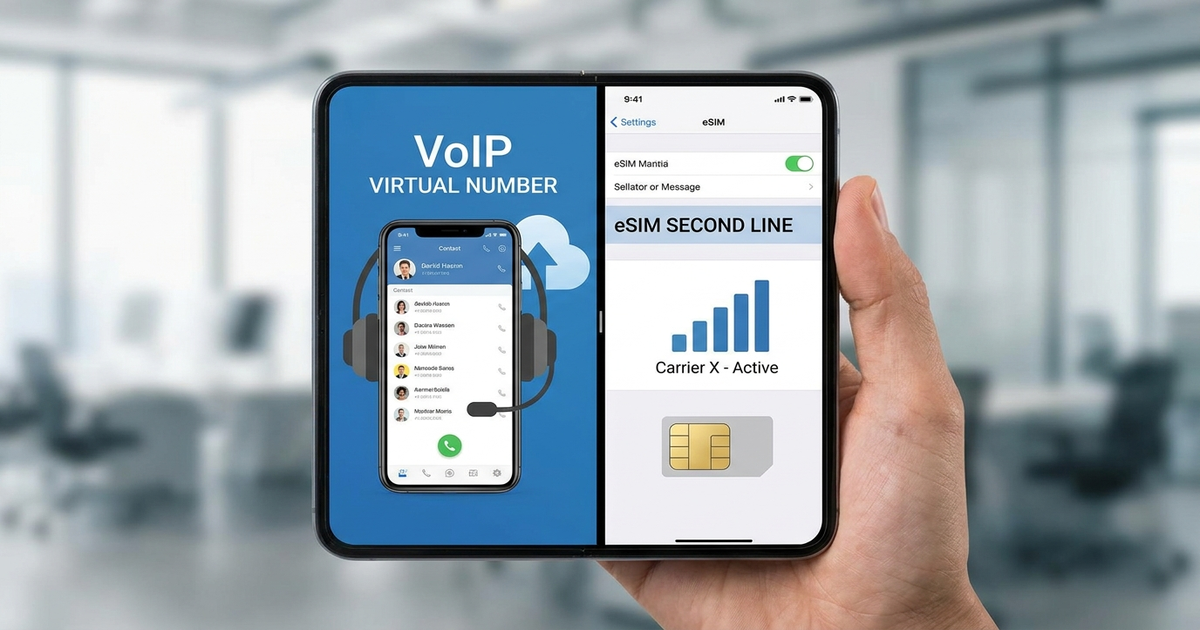
A virtual second number (an app-based VoIP line like TextNow, Hushed, or Google Voice) is cheap and hides your real number, but banks and messaging apps often reject it because it never touches a carrier's network database. An eSIM second line is a real mobile number issued by a carrier — it passes bank 2FA, verifies WhatsApp and Telegram, and can dial 911 — for roughly double the monthly cost. Need verification codes and emergency calling to actually work? Get the eSIM. Need privacy on a budget and don't care about banking apps? The virtual number app is fine.
Chester Takau
Chester Takau is an independent reviewer of dual-SIM and eSIM technology, testing setups from the Pacific where connectivity choices really matter.
The two options solve different problems, not the same one. A virtual number is software: an app assigns you a phone number that routes calls and texts over the internet, and nothing about it touches a carrier's actual network. An eSIM second line is hardware-adjacent: it's a genuine mobile number from a real carrier, delivered digitally instead of on a plastic card, but registered in the same systems banks and messaging apps already trust. That one distinction — whether the number exists inside a carrier's database or only inside an app's servers — decides almost everything below.
Virtual Number or eSIM Line? Quick Checker
Answer two questions and get a straight recommendation, not a sales pitch.
General guidance based on how carrier verification (HLR) and VoIP numbering actually work — individual banks and apps vary, so test with a small top-up before committing.
Virtual Number App vs eSIM Second Line at a Glance
| Feature | Virtual Number App (VoIP) | eSIM Second Line (Carrier) |
|---|---|---|
| Typical cost | ~$4.99–$9/mo | ~$10–15/mo, or under $1/mo for number-only add-ons |
| Bank 2FA / OTP codes | Often rejected | Passes as a normal mobile number |
| WhatsApp / Telegram signup | Frequently flagged or blocked | Works like any SIM |
| 911 / emergency calls | Not supported on most apps | Full carrier emergency calling |
| iMessage / FaceTime / RCS | No — separate service, not a real line | Yes, RCS now works on dual-SIM iPhones on iOS 18+ |
| Needs a data connection | Always | No — runs on the cellular network itself |
| Hides your real identity | Yes, easily | No — tied to ID at signup like any SIM |
A second number splits into two very different jobs, and the industry's own 2026 explainers have converged on this same framing: an eSIM keeps you connected to a real network, while a virtual number gives you a disposable identity layered on top of one. They're complements more often than they're competitors — the mistake is assuming either one can do the other's job. For the underlying mechanics of how a phone runs two numbers at once in the first place, the how two SIM cards share one phone guide covers the physical-SIM version of this same setup.
Why Your Bank and WhatsApp Might Reject a Virtual Number
Every real mobile number lives in a carrier's Home Location Register — the database that confirms a SIM is genuine and tied to an active account. A VoIP virtual number was never assigned a slot in that register; it exists entirely inside the app's own servers, routing calls and texts over data instead of the cellular network. Banks and services like WhatsApp check against that carrier-level record before trusting a number for verification, which is exactly why VoIP numbers get rejected or flagged even when the call and text delivery works fine for everything else. This isn't a rare edge case, either — the FTC logged 1.1 million identity-theft reports and $12.5 billion in fraud losses in 2024, which is the backdrop pushing more services to tighten number-verification checks rather than loosen them.
What an eSIM Second Line Gets You That an App Can't
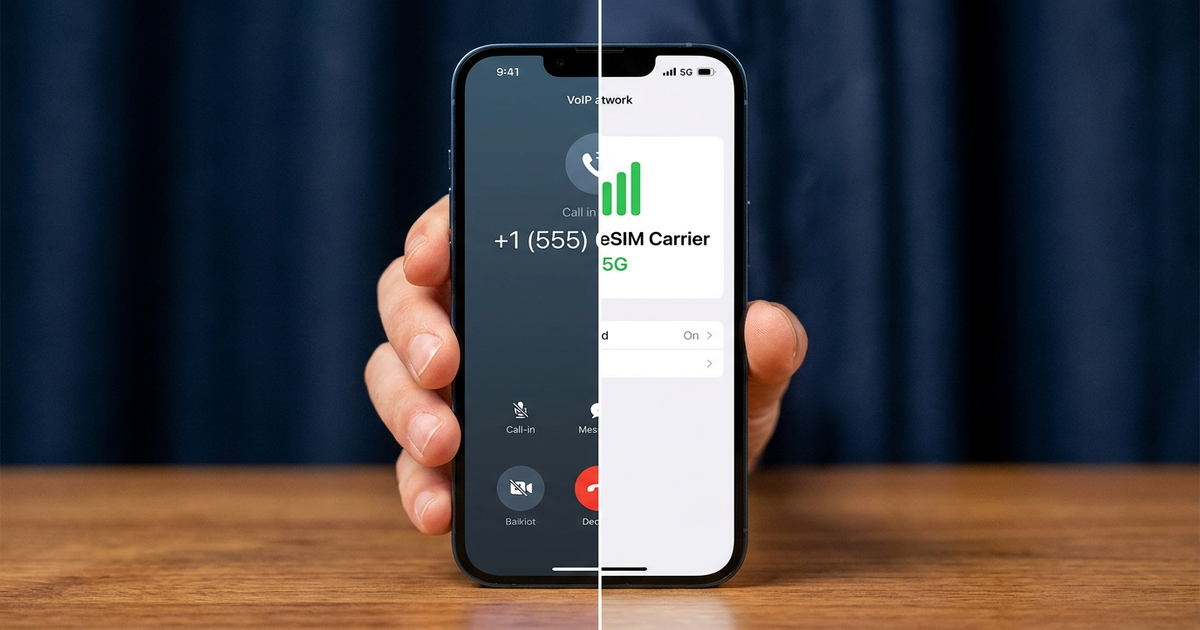
An eSIM second line isn't a workaround — it's the same embedded chip technology your phone already uses for its primary number, just carrying a second carrier profile. Because it's downloaded rather than inserted as a physical card, activation takes minutes, but the number itself behaves identically to a traditional SIM once it's live: it can dial 911, it can receive RCS messages on dual-SIM iPhones running iOS 18 and later, and it keeps working with zero data connection since it rides the cellular network directly. For the deeper explanation of how that embedded chip replaces the plastic card entirely, see the how embedded eSIM chips work explainer. The one catch: most phones still only run one physical SIM plus one active eSIM at a time, so a second eSIM line competes for that same second slot rather than adding a third.
The Real Cost, Month by Month
App-based virtual numbers bottom out around $4.99/month for a paid tier that actually receives codes reliably — the free tiers get recycled between thousands of users, so a code you're waiting on may never arrive because the number is already tied to someone else's account. Carrier eSIM second lines run $10–15/month billed through your existing plan, which buys you the verification reliability above. The gap is narrowing fast, though: Saily launched a persistent US +1 number add-on in 2026 priced at $0.84/month specifically for travelers who just need a number that passes 2FA without paying for a full second line. If you're already running a data eSIM and just want to add a number on top without starting over, the topping up an eSIM profile without losing the number guide covers keeping that same profile funded.
Testing Both From the Pacific
I run a business line separate from my personal number, and the two approaches fail in different places out here. A virtual number app is genuinely useful for keeping a public-facing business contact off my personal SIM without paying for a second carrier plan — but it stops being useful the moment a client's payment platform demands SMS verification, because the app number gets rejected the same way a bank's would. An eSIM second line solves that, but only on phones that support two active profiles at once; most mid-range Android phones sold in this region still cap out at one physical SIM plus one active eSIM, so "just add a second eSIM" isn't always an option regardless of budget. That device ceiling gets skipped over in most coverage of this comparison, and it's usually the deciding factor before cost even comes up.
This clip covers the device side of that ceiling directly — which phones actually support two active eSIM profiles at once, and where the limit sits on the ones that don't:
Frequently Asked Questions
Can I make a 911 call on a virtual number app?
No, not reliably. Most VoIP second-number apps don't support emergency calling at all, since they route through data rather than a carrier's voice network. Keep a real cellular line — your primary number or an eSIM second line — as the one you'd actually dial 911 from.
Does a virtual number work with no signal or data?
No. A VoIP number needs an active data connection — Wi-Fi or mobile data — to send or receive anything. An eSIM second line works exactly like a normal cellular line and needs no data at all for calls and texts.
Do iMessage and FaceTime work on an eSIM second line?
Yes. iMessage and FaceTime attach to whichever number you assign them to in iOS settings, and an eSIM second line qualifies the same as a physical SIM. A VoIP virtual number doesn't support either.
If I stop paying, do I lose the number and everything tied to it?
Yes for both. A VoIP app number gets recycled quickly once billing lapses, and a carrier eSIM number is reclaimed after the standard grace period, same as a physical SIM going inactive. Either way, anything using that number for 2FA needs updating before you cancel.
Which one hides my real number better for Craigslist or dating apps?
A virtual number app, clearly. It's cheaper, disposable, and was built for exactly this use case — you're not trying to pass bank-grade verification, just keep your real number off a public listing.
Can I keep a home number while living abroad without paying roaming?
Yes, with either approach, though the mechanism differs. A virtual number app keeps working anywhere you have data. An eSIM add-on tied to your home carrier can also stay active for incoming SMS without a roaming data plan, depending on the carrier's terms.
Sources: SecondSim, eSIM vs VoIP (2026) · GoSimless, eSIMs vs virtual numbers key differences (2026) · Numero eSIM, virtual number vs eSIM difference (2026) · Cloaked, best second phone number apps (2026) · SLYNUMBER, two phone numbers on one phone (2026) · MyBestSim, telephone number online (2026) · Apple Support, Dual SIM and eSIM
Updated August 2026.
Transparency note: This article was researched and written by Chester Takau with AI assistance for research gathering and drafting. All recommendations reflect the author's own editorial judgment.


