What Dual SIM Originally Meant (And What It Is Now)
What Dual SIM Originally Meant (And What It Is Now)

I've been running a dual SIM phone since 2009 — back when it meant carrying a chunky device with two physical card slots, manually swapping between a local number and a roaming SIM every time I crossed a border. In 2026, that workflow looks almost unrecognisable. Half the flagship phones sold today don't even have a second physical slot anymore. Instead, they carry something called an eSIM, and most people I speak to still aren't sure what it actually is or whether it changes anything for them.
This post is the plain-language answer to that question — backed by market data, real travel cost comparisons, and voices from people using these setups in the field right now. No spec-sheet padding. Just what you actually need to know.
What Dual SIM Originally Meant
Until around 2020, "dual SIM" meant exactly what it sounds like: two physical SIM card slots in the same phone. You could slot in two nano-SIMs and switch between them manually or have them both active simultaneously, depending on the phone. The practical uses were straightforward:
- Travellers: Keep your home SIM active for calls, insert a cheap local data SIM when you land
- Business users: Separate a personal number from a work number on one device
- Budget markets: Use a low-cost data SIM alongside a voice-only plan
The downsides were obvious. You needed to physically swap cards, track which slot carried which plan, and once phones started getting thinner, manufacturers were looking for reasons to remove hardware. The second SIM tray was an easy target. The global dual SIM smartphone market was valued at USD 51.37 billion in 2024 and is forecast to reach USD 59.13 billion in 2026, growing at 7.29% CAGR through 2035. [9]
What eSIM Actually Is (and Isn't)
 Photo by ThisisEngineering on Unsplash
An eSIM is an embedded SIM — a small chip soldered directly onto the phone's motherboard that performs the same job as a physical SIM card but is activated digitally rather than physically inserted. You scan a QR code, download a carrier profile, and the plan is live within minutes. No card, no tray, no post office trip.
What it is not is a fundamentally different technology. It connects to the same mobile networks, operates on the same frequencies, and provides the same call, text, and data service. The difference is entirely in how you provision it. [3]
In most phones sold outside the US, eSIM is the second slot, not the only one. You still have a physical SIM tray for one card, and the eSIM handles the second slot digitally. In the US, iPhones from the 14 series onwards are eSIM-only — a market-specific shift driven by carrier infrastructure, not a global standard yet. [2, 4]
This is a legitimate concern worth naming directly. The physical SIM ownership argument is real — a carrier cannot remotely deactivate a physical card the way they can theoretically suspend an eSIM profile. For most everyday users this never becomes an issue, but travellers in regions with strict data regulations or those using prepaid plans may prefer the physical card for its tangibility and portability. [7]
What Actually Changed in 2026
The big shift over the past two years hasn't been the technology itself — eSIM has existed since 2016. What changed is adoption. [1]
Global eSIM Connections Growth (2022–2026)
The Real Cost Difference: eSIM vs Roaming vs Physical SIM
Cost per GB: Traditional Roaming vs Travel eSIM (2024–2026)
The savings are not marginal. Travel eSIM providers became mainstream and genuinely affordable in 2026 — often 500–1,000× cheaper than pay-per-use roaming rates. [5] Traditional carriers could face up to $11 billion in lost roaming revenue as consumers shift to eSIM alternatives. The travel eSIM market itself was valued at USD 1.46 billion in 2024 and is expected to reach USD 3.08 billion by 2032. [13]
| Scenario | Roaming (no plan) | Carrier day pass | Travel eSIM | Saving vs roaming |
|---|---|---|---|---|
| 1 week Paris (3GB) | $6,150 | $84 | ~$8.70 | 99.8% |
| 10 days Bali (5GB) | $10,250 | $120 | ~$14.50 | 99.8% |
| 2 weeks USA (7GB) | $14,350 | $168 | ~$22 | 99.8% |
| 3 weeks Eurotrip (10GB) | $20,500 | $252 | ~$32 | 99.8% |
Source: CelleSIM cost modelling [6], AllSIM roaming comparison [7]
Which Setup Is Right for You
If you travel internationally more than twice a year
 Photo by Jason Briscoe on Unsplash
The physical SIM + eSIM combo is your best setup. Keep your home carrier's physical SIM in the tray permanently — it holds your number, your 2FA texts, your bank alerts. Use the eSIM slot for travel data plans that you activate and delete per trip. [8]
If you're weighing eSIM against portable WiFi hotspots — a genuine decision when travelling with multiple devices — AIGadgeTech's eSIM vs portable WiFi comparison covers cost, coverage, and battery trade-offs across different trip types. [12, 13]
If you use separate work and personal numbers
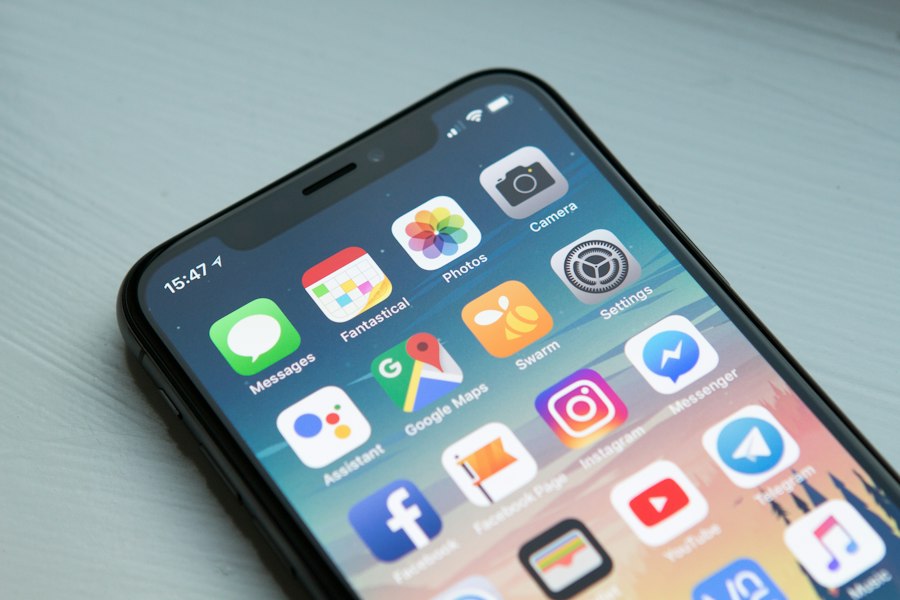 Photo by Charles Deluvio on Unsplash
eSIM is genuinely convenient here — toggle the work line off in the evening without removing any hardware. Both lines show up as separate numbers in your phone settings. On iPhone, you set a default. On Android (Samsung One UI and Pixel), you get a prompt each time you call asking which number to use. [2]
Check one thing first: if your employer issues your work SIM, confirm they support eSIM provisioning. Many corporate IT departments still issue physical SIMs, so you may end up with a physical work SIM in the tray and personal eSIM as the second line — which still works fine.
If you're buying a budget phone
This is where traditional dual SIM still dominates. Budget Android phones under $300 — the segment that leads sales in Pacific markets, Southeast Asia, Africa, and South Asia — frequently still offer two physical SIM slots. The markets that buy these phones often have patchy eSIM carrier support, and physical SIM cards are easier to provision where digital activation infrastructure is still developing. [9]
If you travel on a cruise or to remote areas
Worth naming because it trips up a lot of people: eSIM on a smartwatch only mirrors your existing carrier plan. It does not let you use a travel eSIM on your watch independently. If your phone runs a travel eSIM for data in a foreign country, your Apple Watch or Galaxy Watch's cellular still routes through your home carrier — at roaming rates. The only exception is a specific international roaming add-on for watch plans. [2, 4]
The Sleep Side of Time Zone Crossing Nobody Talks About
 Photo by Nathan Dumlao on Unsplash
Crossing time zones does more damage to your sleep quality than most travellers realise. Research published in Sleep (Oxford Academic) analysed 1.5 million nights of data and found that sleep duration returns to baseline after roughly 2 days following a long flight — but sleep timing takes over 15 days to fully recover. [10] Eastward travel causes more severe disruption than westward travel. And REM sleep — the stage responsible for memory consolidation and emotional processing — is disproportionately reduced for 5–6 days after long eastward trips.
Sleep Recovery After Long-Haul Eastward Travel
If you've ever landed somewhere, fumbled with a new SIM setup, and made a mistake you wouldn't normally make — that's your brain operating on disrupted REM cycles, not incompetence. The science of chronotype alignment and circadian rhythm adjustment is more practical than it sounds — strategies like timed light exposure can shift your body clock days before you board. [11]
REM sleep specifically takes the worst hit from travel disruption — it's the brain's "overnight maintenance" stage, disproportionately squeezed when sleep is fragmented. Understanding what REM sleep is doing and how to protect it during travel weeks is worth 10 minutes of reading for any frequent flyer. [10]
The Practical Summary
Primary Reasons for Dual SIM / eSIM Use (2026 Consumer Survey)
| Your situation | Best setup | Why |
|---|---|---|
| International traveller (2+ trips/year) | Physical SIM + eSIM combo | Home number stays live; save 99.8% vs roaming [6] |
| Work/personal split | eSIM for one line, physical for other | Toggle work line off without removing hardware |
| Budget phone buyer | Two physical SIM slots | Better carrier support in Pacific/SE Asia/Africa [9] |
| US iPhone user | eSIM only (no choice) | iPhone 14+ removed physical tray in the US [2] |
| Smartwatch cellular user | Confirm home carrier watch roaming plan | Watch eSIM won't use your travel eSIM abroad [4] |
The technology isn't complicated once you strip the jargon away. Physical SIM tray + embedded eSIM is still dual SIM — one slot you insert a card into, one you scan a QR code to activate. For most readers, the hybrid setup is the most flexible option in 2026, and the travel eSIM market has finally matured to the point where it's cheaper and less stressful than hunting for a local SIM on arrival. [5]
Next up in this series: the best dual SIM smartphones under $400 in 2026 that keep both SIM slots active on 4G/5G simultaneously — including options that work well across Pacific Island networks.
Sources & Further Reading
- Juniper Research — eSIM Connections to Reach 1.5bn Globally in 2026 (30% YoY growth)
juniperresearch.com - GSMA Intelligence — Consumer eSIM: Device and MNO Service Trackers, Q1 2026
gsmaintelligence.com - CelleSIM Research — 75+ eSIM Statistics 2026: Market Size, Adoption & Growth Data
cellesim.com - Grand View Research — eSIM Market Report 2026 (USD 13.61B in 2026)
researchandmarkets.com - Juniper Research — Travel eSIM Users to Grow 440% Globally Over the Next 5 Years
juniperresearch.com - CelleSIM — Mobile Data Prices Worldwide 2026: Cost of 1GB in 100+ Countries
cellesim.com - AllSIM — eSIM vs Physical SIM vs International Roaming: Best for 2026
allsim.shop - Simology — eSIM vs Physical SIM for Travel 2026: Complete Guide
simology.io - Business Research Insights — Dual SIM Smartphone Market Forecast 2026–2035
businessresearchinsights.com - Sleep (Oxford Academic) — Insights about travel-related sleep disruption from 1.5 million nights of data (2025)
academic.oup.com - NCBI/PMC — Basic Chronobiology: What Do Sleep Physicians Need to Know?
pmc.ncbi.nlm.nih.gov - TooSim — Pocket WiFi vs Travel eSIM: What's the Best Choice?
toosim.com - Yahoo Finance / Travel eSIM Market — USD 3.08B by 2032
finance.yahoo.com
Disclaimer: This post reflects personal experience and research. Carrier eSIM support varies by country and device model — always verify compatibility with your specific carrier before purchasing an eSIM plan. This article was developed with assistance of AI.


